Section
Fax Technology
How fax technology works and how it evolved.
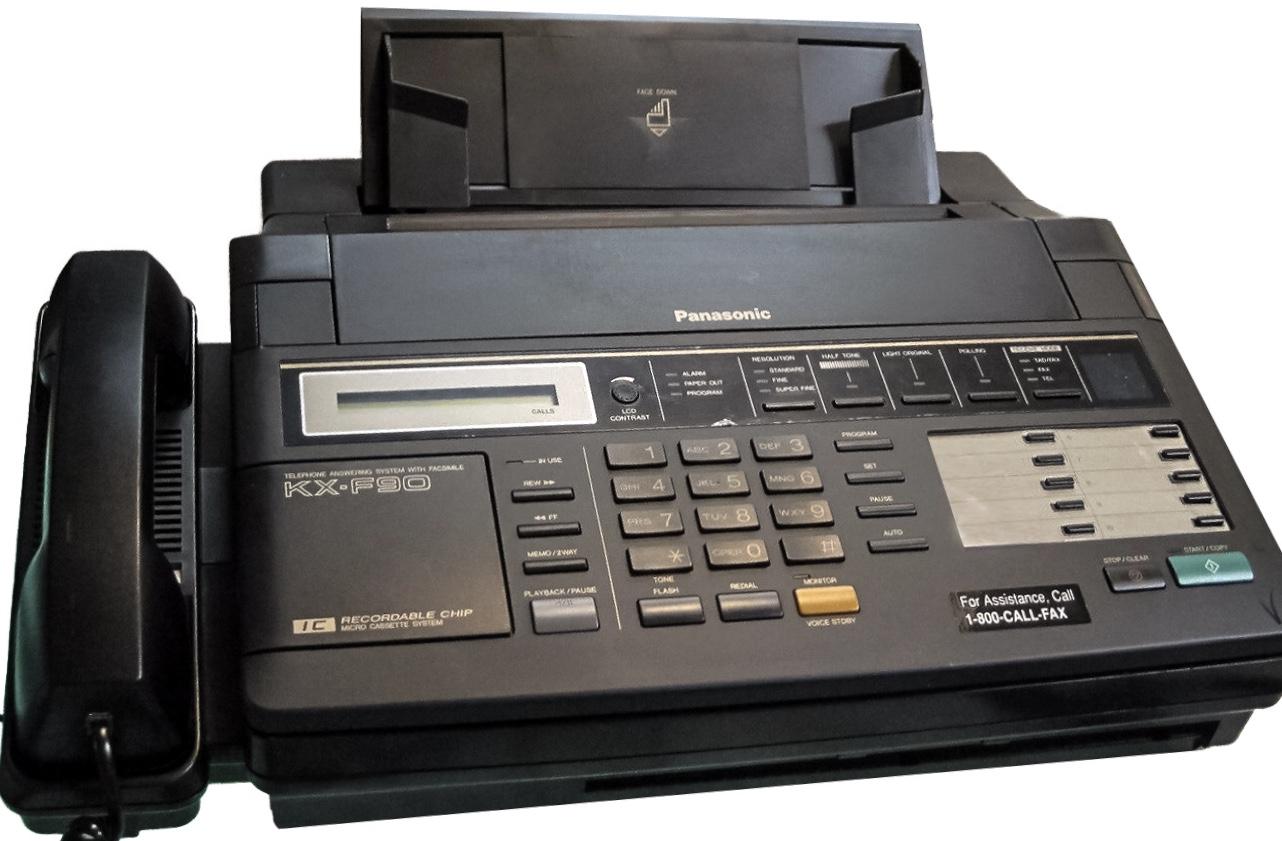
Document transmission technology — how a signed page moved across distance in minutes, and why that mattered for commercial tempo. Treated as both a historical and a technical subject.
Two roads onto the packet networkInternet Fax Standards: T.37 Store-and-Forward and T.38 Real-TimeA fax call is not a file transfer. Under ITU-T Recommendation T.30, two terminals hold a live conversation with response windows built into it: capabilities are declared, a page is sent, the receiver answers, and the sender waits. When the page had to cross a data network instead of a telephone circuit, that conversation could be abandoned or it could be preserved, but it could not be half-kept. The ITU-T published both answers, and the base editions of T.37 and T.38 both carry the same date — 06/98. They are two settlements of one architectural question, not two stages of one technology.
- Why Fax Is Still UsedWhy a technology widely declared obsolete is still in active use, and what the persistence reveals about trust, evidence, and the cost of switching.The persistent exception—
- The Decline of Office Fax MachinesWhy the office fax machine faded over a long span instead of being switched off, and what the slowness of that decline reveals about institutional change.The long decline—
- Fax Machines Before EmailWhat the working day looked like when the fastest way to put a document in someone's hands was a machine in the corner of the office.Before the inbox—
- Analog Fax vs Digital FaxWhy the move from a dedicated phone line to a packet network changed what fax cost, how reliable it felt, and what role it could play in an office.From phone line to packet—
- The History of Business FaxingHow the ability to move a signed page across distance in minutes reshaped commercial tempo, then quietly became ordinary office infrastructure.The fax era of business—
- How Fax Machines WorkHow a fax machine scans a page, sends it over a telephone connection, and reconstructs it at the other end.Introductory—