Key takeaways
- Fax declined gradually because the conditions that justified it were dismantled unevenly, not all at once.
- A superior alternative existing is not the same as an organisation being able or willing to switch.
- The lag between fax becoming unnecessary and fax actually leaving is explained by institutional inertia, not technical merit.
The peak fax office and its assumptions
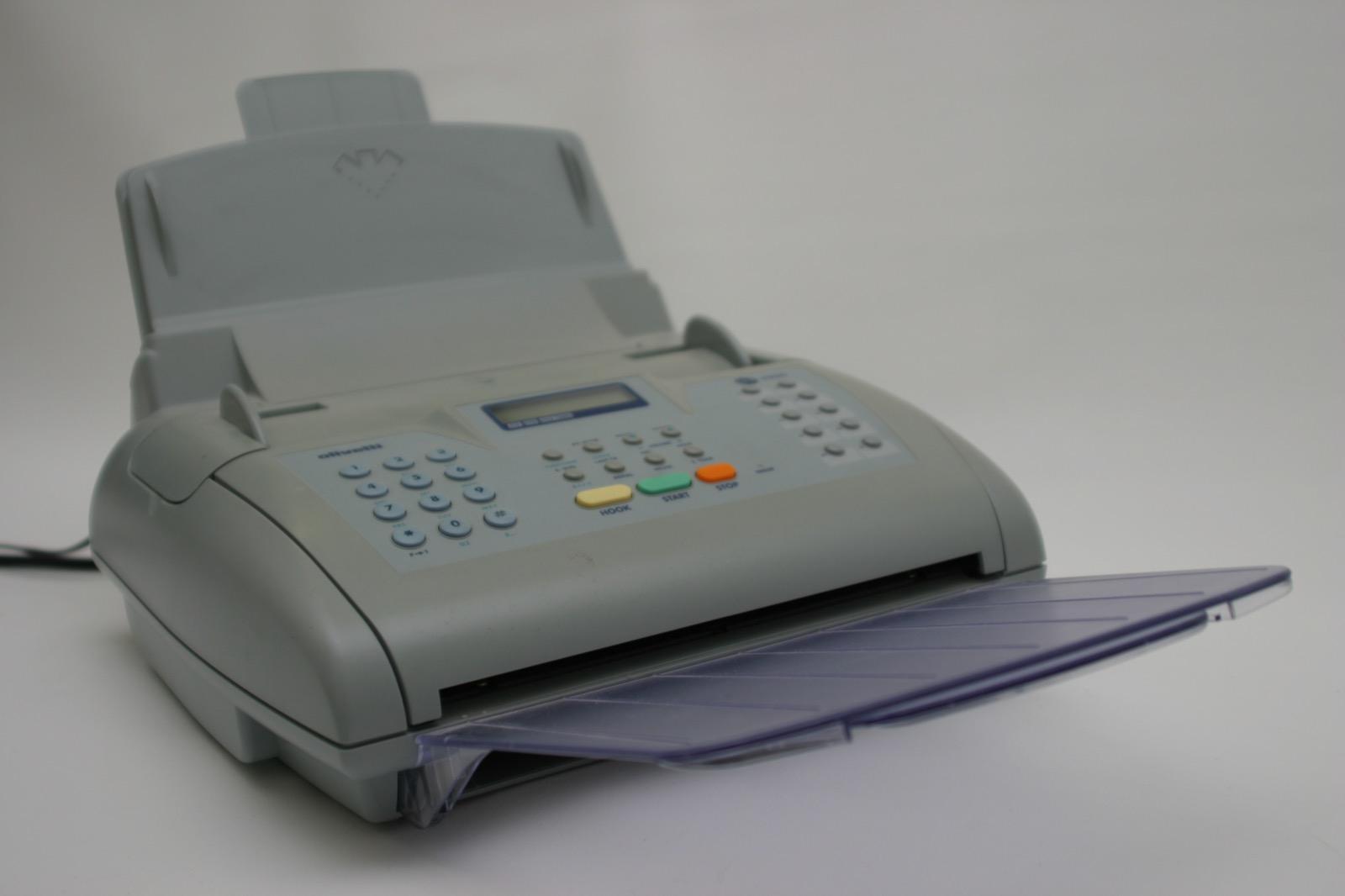
At its height the office fax machine rested on a small set of assumptions that everyone shared and nobody examined: that a signed page was the unit of serious business, that the fastest way to move that page was the machine in the corner, and that a counterparty could be assumed to have one. Those assumptions were mutually reinforcing. Each firm kept a machine partly because every other firm had one, and the universality was itself a reason not to question it.
This is the structure that makes the later decline worth studying. A capability held in place by mutual expectation does not fall when a better option appears; it falls when the expectations themselves come apart. The peak fax office was not a technology at its best so much as a convention at its most entrenched, and conventions decay differently from devices.

What digital workflows made redundant
Digital document workflows attacked fax's value piece by piece rather than all at once. Email took routine correspondence, because an exact, searchable, forwardable file beat a reconstructed image for anything that did not need to be a signed page. Scanning and digital document handling then took much of what remained, including the ability to produce and circulate a faithful copy of a signed original — the workflow detailed in the archive's account of scan-to-searchable PDF absorbed precisely the function fax had monopolised.
By the end of that process, the set of tasks for which fax was genuinely the best tool had shrunk to a narrow band: documents whose faxed form carried specific procedural or evidentiary weight. Everything outside that band had a better digital answer. Logically, the machine should have gone once its exclusive territory had been this thoroughly reduced. It largely did not, and that mismatch is the centre of the story.
Why decline was gradual, not sudden
Decline was gradual because fax's necessity was a network property, not an individual one. A single organisation could not unilaterally retire fax while any counterparty still expected one; doing so would simply make it the party others could not reach by the channel they used. Retirement was therefore gated by the slowest-moving correspondent in any given relationship, and across a whole economy that slowest mover was always someone.
There was also an asymmetry of risk. Keeping a fax machine running cost a little and threatened nothing. Removing it risked a missed document, a non-compliant transmission, or an unreachable channel with a partner who had not moved on. When the downside of keeping is small and the downside of removing is uncertain but potentially serious, the rational individual choice is to keep — and millions of such individually rational decisions sum to an economy-wide delay. The friction of switching was not eliminated by the existence of a better tool; it was arbitrated, organisation by organisation, in favour of waiting.
The institutional inertia that slowed it
Beyond the network effect sat plain institutional inertia. Procedures specified fax explicitly. Forms printed a fax number. Regulators, partners, and internal policy referenced it as an accepted method, and changing a written procedure is slower and more political than changing a habit. An organisation does not retire a documented process because a better technology exists; it retires it when someone is tasked, resourced, and authorised to rewrite the procedure — and that rarely competes well for priority against work with a clearer return.
| Pressure to remove fax | Inertia that absorbed it |
|---|---|
| A cheaper, exact, searchable digital alternative existed | No counterparty-wide moment to switch; the slowest correspondent set the pace |
| Most fax traffic had a clearly better digital channel | The residual signed-page niche kept a reason to keep the machine plugged in |
| Maintaining the machine was a recurring, visible cost | Removing it carried uncertain compliance and reachability risk |
| Staff increasingly defaulted to digital tools | Written procedures, forms, and policies still named fax explicitly |
The trade-offs of letting fax go
Letting fax go was never cost-free, which is part of why it was deferred. Retiring the machine meant ensuring every counterparty had an accepted alternative, that procedures had been rewritten and re-approved, and that the evidentiary comfort attached to a faxed transmission report had a recognised digital substitute. Each of those was achievable, but each required deliberate effort with little visible reward, set against a status quo that quietly worked.
So organisations made the trade they tend to make with low-cost legacy infrastructure: they paid the small ongoing price of keeping it rather than the larger one-off price of removing it cleanly. That decision was defensible in isolation and, repeated everywhere, is precisely why a technology widely understood as obsolete remained plugged in for years after its case had collapsed. The deeper logic of that survival is examined in the archive's page on why fax is still used, and the workflow it had displaced fax from is traced in fax machines before email.
What the decline left in place
The decline did not end in a clean removal; it ended in a residue. What remained was not a thriving fax culture but a thin, persistent layer: the procedures still naming it, the niches still requiring it, and the small number of relationships in which one party had never been pushed off it. The machine fell from default to exception, and an exception that is cheap to keep and risky to remove is the most durable kind.
That is why the decline of the office fax machine reads less like an ending and more like an arrested one — a retirement that was started, made overwhelmingly successful in volume, and then left deliberately unfinished because finishing it never paid for itself. The last stretch of any displacement is the slowest, and fax's last stretch is still, in places, being walked.
Frequently asked questions
- If digital tools were better, why didn't offices drop fax quickly?
- A better tool existing is not the same as being able to switch. Fax's necessity was a network property: no organisation could safely retire it while any counterparty still expected one, so the pace was set by the slowest correspondent in every relationship.
- What role did procedures and regulation play in the slow decline?
- A large one. Written procedures, forms, and policies named fax explicitly, and rewriting and re-approving a documented process is slower and more political than changing a habit. Inertia in the paperwork outlasted inertia in the technology.
- Why keep a fax machine that is mostly unused?
- Because keeping it cost little and threatened nothing, while removing it carried uncertain compliance and reachability risk. With a small downside to keeping and an uncertain downside to removing, deferral is the rational individual choice.
Continue in the archive
Related reading
Fax · Before the inbox
Fax Machines Before Email
What the working day looked like when the fastest way to put a document in someone's hands was a machine in the corner of the office.
Fax · The persistent exception
Why Fax Is Still Used
Why a technology widely declared obsolete is still in active use, and what the persistence reveals about trust, evidence, and the cost of switching.
History · From early image transmission to the digital decline
The History of Fax Machines
How the idea of sending images over a distance developed into the office fax machine and its eventual decline.
Workflows
Scan to Searchable PDF
A repeatable workflow for turning paper documents into searchable, archival PDF files using scanning and OCR.
Modern tools
Contemporary apps for the same task, published by HELPERG LLC — the publisher of this archive.

Fax
Send and receive faxes from a phone or a browser, without a fax machine.