Key takeaways
- Spooling decoupled requesting a print from performing it: the job is accepted instantly to storage and released to the device in order.
- The point was utilisation — keeping a slow, expensive shared device fed while never blocking the fast computers and people behind it.
- Buffering an asynchronous resource is a general computing pattern; print spooling is one of its earliest everyday appearances and it long outlived the hardware.
The terms have precise meanings — the archive defines the print spooler and the print queue in the glossary — and the social life of the queue, its etiquette and informal authority, is the subject of the page on early network printing systems. This page is about neither the definition nor the manners. It is about the problem spooling was invented to solve, which was an economic one: how to keep a slow, costly device fully occupied without ever forcing a fast computer, or the person using it, to stand still.
The slow-device problem
A printer commits ink or impact to physical paper, and physical processes are slow. The computer generating the work is fast, and the people generating the work are many. Without something in between, that mismatch forces a choice, and both options are bad. Either the computer waits, frozen, until the printer has finished — wasting the expensive, fast resource on the pace of the slow one — or the user waits at the device, hovering until their turn, wasting their time. A naïve direct connection between a fast many-headed source and a single slow sink wastes whatever it does not block.
Spooling as indirection
Spooling resolves the mismatch by inserting a buffer. Instead of sending a job to the printer, the computer hands it to an intermediary that accepts it instantly to storage and confirms receipt. As far as the computer and the user are concerned, the job is done; they are free to move on at once. The intermediary then feeds the stored jobs to the device at the device's own pace, in order, one after another. The decisive move is that the act of requesting a print has been separated from the act of performing it. Each side now runs at its own speed, connected by a buffer rather than blocked by a direct link.
This is indirection in its purest form: a layer interposed between a producer and a consumer that runs at incompatible rates, absorbing the difference so neither has to match the other. The buffer does not make the printer faster; it makes the printer's slowness someone else's problem — the spooler's — rather than the user's.
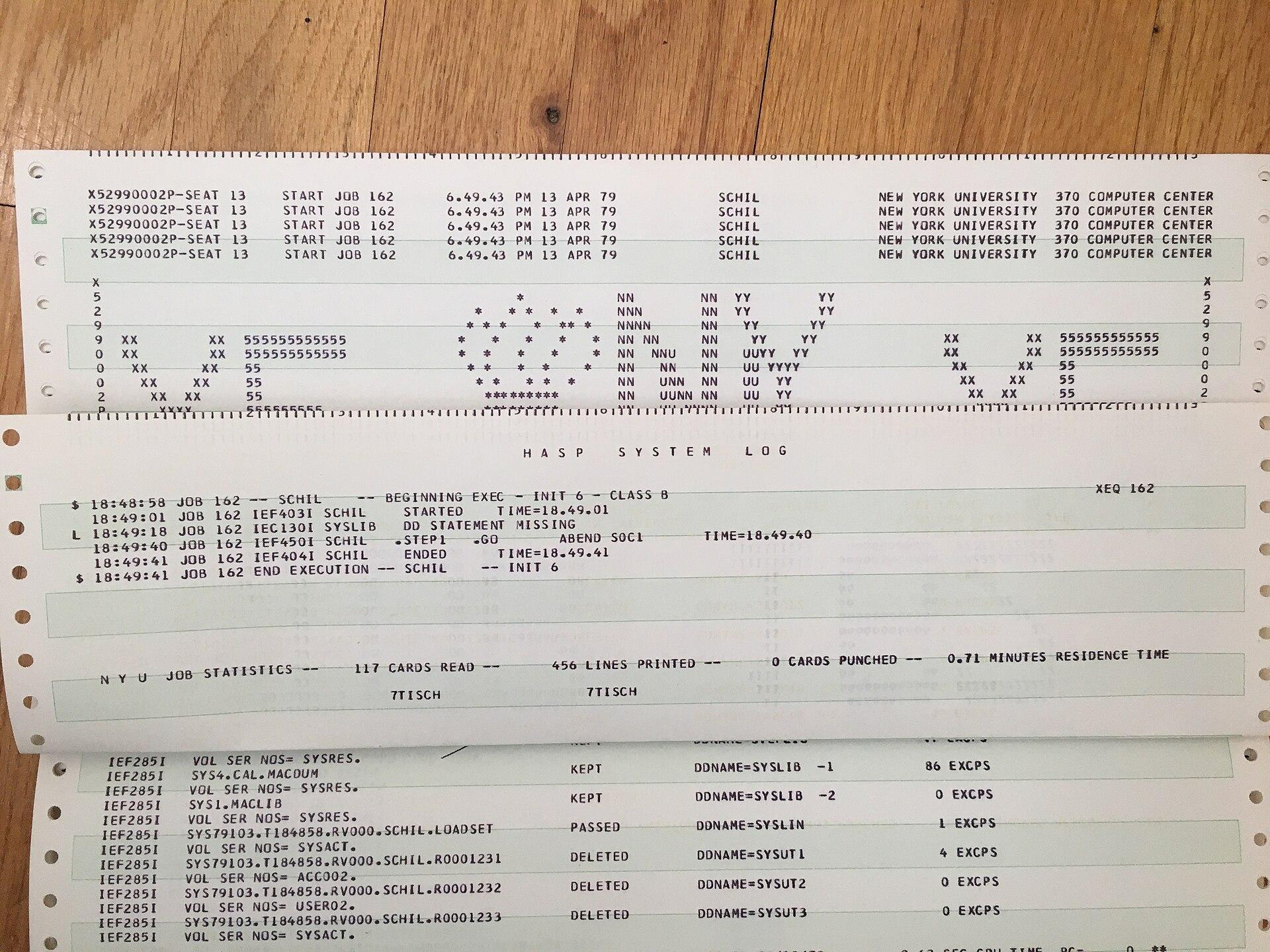

The queue as a scheduling structure
Once jobs are held rather than printed immediately, an order must exist among them, and that order is the queue. Viewed mechanically — setting aside the social line it also created — the queue is simply the schedule: the data structure that records what has been accepted and determines what the device does next. It is what lets the intermediary keep the printer continuously supplied, because there is always a next job ready the instant the current one finishes. The queue is how the buffer turns a burst of simultaneous requests into a steady stream the slow device can actually consume.
Why this maximised an expensive asset
The economic payoff is the heart of it. A costly shared device only earns its cost if it is kept busy; idle capital is waste. A direct connection guarantees idleness, because the device sits unused in every gap while a computer prepares the next job or a person walks over. Spooling closes those gaps: the buffer holds work in reserve and releases it the moment the device is free, so utilisation climbs toward the device's actual capacity. The same arrangement that frees the user also keeps the machine fed, and it is this double effect — no one waits, nothing sits idle — that made an expensive device worth sharing among many in the first place.
An idea that outlived printing
Print spooling matters beyond printing because it is one of the earliest everyday appearances of a pattern that became universal in computing: when a fast producer meets a slow or contended consumer, place a buffered queue between them and let each run at its own rate. The same shape recurs wherever work is accepted now and processed later — the indirection is the lesson, and printing happened to be where many encountered it first. The hardware that the first spoolers fed has been replaced many times over, but the architectural idea they embodied — decouple, buffer, schedule — is now so ordinary that it is barely noticed. It was, in a sense, learned at the printer. The way that buffered, administered order also reshaped who controlled printing is taken up in the archive's history of print servers in large offices.
Frequently asked questions
- What problem did print spooling actually solve?
- An economic one. A printer is slow and expensive while the computers and people feeding it are fast and many. Without a buffer, either the computer freezes waiting for the printer or the user waits at the device. Spooling decouples the two so neither has to wait on the other.
- How does a spooler differ from the print queue?
- The spooler is the intermediary that accepts jobs instantly to storage and releases them to the device at its own pace; the queue is the ordered schedule of held jobs that determines what prints next. The spooler does the buffering; the queue records the order. The glossary defines each precisely.
- Why is spooling considered significant beyond printing?
- Because it is an early, everyday instance of a pattern that became universal: when a fast producer meets a slow or contended consumer, put a buffered queue between them so each runs at its own rate. Printing is where many first met an idea that now underlies much of computing.
Continue in the archive
Related reading
Glossary · Definition
Print Spooler
The print spooler is the system component that accepts print jobs and manages them while they wait to print.
Glossary · Definition
Print Queue
The print queue is the ordered list of jobs waiting to print on a particular printer.
History · The first shared-printer networks
Early Network Printing Systems
When a printer stopped belonging to one desk, a queue appeared — and with it an office etiquette, an informal authority, and norms that outlived the hardware.
History · The managed print fleet
Print Servers in Large Offices
At scale, the print server stopped being a way to share a device and became an instrument of governance — metering, quotas, defaults, and fleet control.