Key takeaways
- At scale a print server's purpose shifts from sharing a device to governing a fleet — metering, accounting, standardising, and setting policy.
- Centralising the path to the printers made printing visible and chargeable, turning an invisible cost into a managed one.
- The same server became the place to enforce defaults and restrictions, so printing became a policy surface rather than a free individual act.
The archive's guide to what a print server is explains the mechanism: a system that accepts jobs and routes them to printers on behalf of many users. That description is complete for a small office, where the server's job is simply to let a handful of people share a machine. It is incomplete for a large one. As the number of users and devices grows, the server becomes the single point through which all printing passes — and a single point through which everything passes is, by definition, the place to measure and control it. The history worth telling is how the convenience became an instrument.
From sharing a device to governing a fleet
A small office shares a printer; a large office operates a fleet. The difference is not only count. A fleet has heterogeneous devices in many locations, departments with different needs and budgets, and a support burden that grows with every model and driver in use. Managing that does not happen at the devices — there are too many — it happens at the server that sits in front of them. Centralising the path to the printers is what makes a fleet administrable at all, because it gives the organisation one place to see and shape printing instead of thousands of independent acts.
This is the pivot. Once printing flows through a central point for reasons of manageability, that point inevitably accumulates functions that have nothing to do with sharing a device and everything to do with running an organisation.

Metering, quotas, and the cost of a page
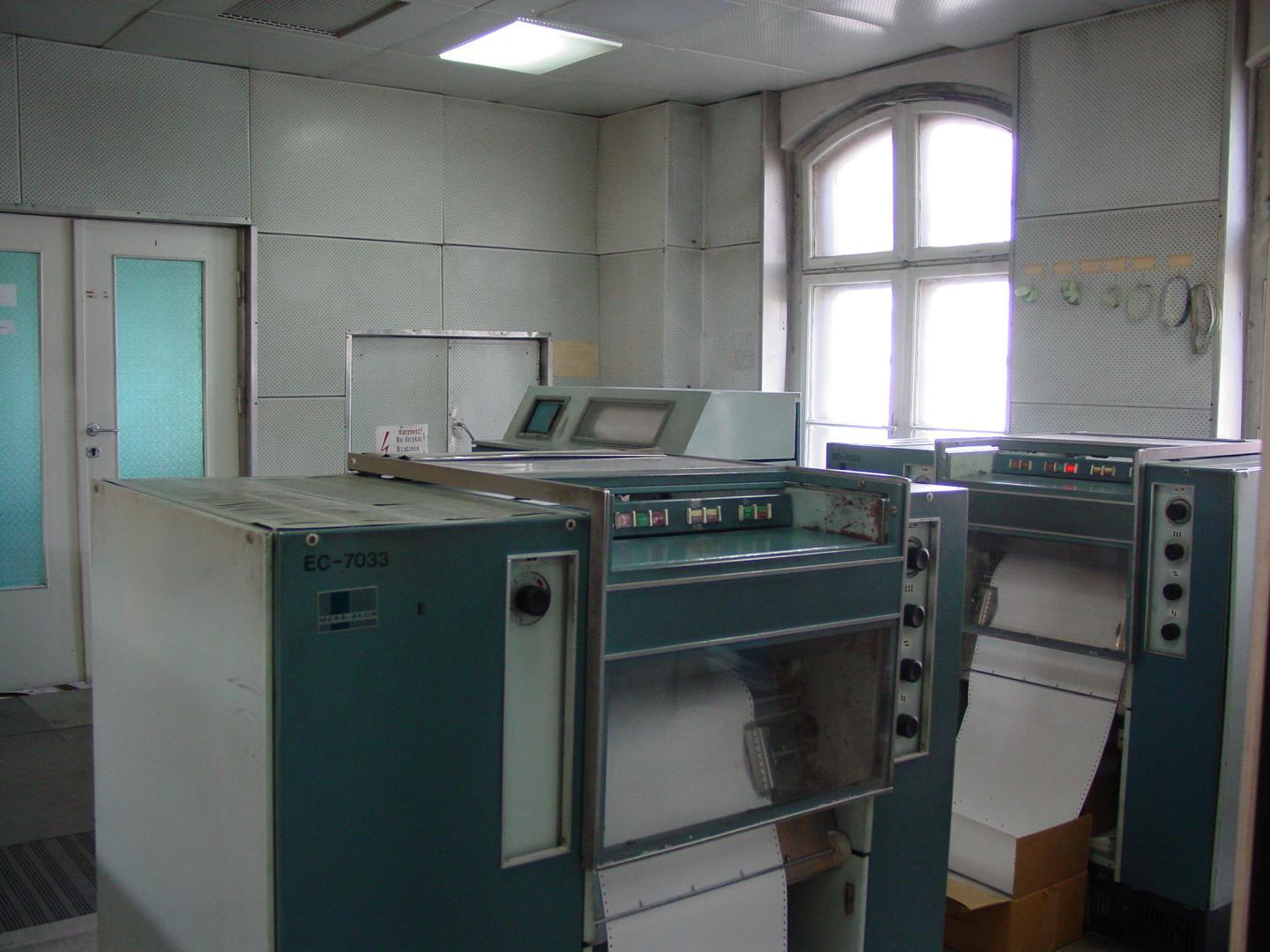
The first function it accumulates is measurement. In a per-desk world the cost of printing is real but invisible, scattered across countless small acts that no one totals. Routing every job through a server makes that cost legible: jobs can be counted, attributed to a user or department, and added up. Once printing is measured it can be priced — charged back to a department's budget — and once it is priced it can be limited, through quotas that cap how much someone may print. A page, previously a free and thoughtless thing, becomes a tracked unit with an owner and a cost. That single change of visibility is what turns printing from an overlooked expense into a managed one.
Standardisation and driver distribution
The second function is uniformity. A fleet assembled device by device tends toward chaos: many models, many drivers, many ways for things to break, and a support team that must know all of them. A central server is the lever against that entropy. It can distribute the correct driver for a device to the people who need it, present printers to users in a consistent way, and impose common defaults so that every desk behaves alike. Standardisation administered from one place reduces the surface area of support — fewer variations to understand, fewer individual failures to diagnose — which at fleet scale is a substantial and recurring saving.
Administration as policy
The third function is governance. Because the server mediates every job, it is the natural place to enforce rules: defaulting to double-sided and monochrome to cut cost and waste, restricting colour or high-volume output to those who are authorised, or holding confidential work until the owner releases it at the device. Each of these is a policy, and the server is where policy meets practice. Printing, which had been a free individual act, becomes a governed one — shaped by rules the organisation sets and the server applies on its behalf.
| Small office: sharing | Large office: governing |
|---|---|
| Let a few people use one printer | Operate many devices across departments and locations |
| Cost of printing is invisible and untotalled | Every job is metered, attributed, and chargeable |
| Each person installs and configures as needed | Drivers and defaults are distributed and standardised centrally |
| Anyone prints anything freely | Defaults, quotas, and restrictions enforce organisational policy |
The managed-print legacy
Everything that large offices later recognised as managed print — chargeback reporting, secure release printing, fleet-wide policy, sustainability metrics — is an extension of this same move: making printing pass through a point where it can be seen, costed, standardised, and controlled. The descendants did not invent a new idea; they elaborated the one already present the moment a fleet became too large to manage at the devices. The print server scaled from a way to share a machine into the organisation's control plane for putting marks on paper, and the underlying social shift this concentrated — order administered rather than seized — is the subject of the archive's history of early network printing systems.
Frequently asked questions
- How is a print server in a large office different from one in a small office?
- The mechanism is the same, but the purpose changes. In a small office the server lets people share a device. At fleet scale it becomes the single point through which printing is metered, priced, standardised, and governed — a control plane, not just a convenience.
- Why did large organisations meter and charge for printing?
- Because routing every job through a central server made an otherwise invisible cost legible. Once jobs could be counted and attributed to a user or department, printing could be priced, charged back, and capped with quotas — turning an overlooked expense into a managed one.
- How does a print server enforce printing policy?
- Because it mediates every job, it is where rules are applied: defaulting to duplex and monochrome, restricting colour or high-volume output, or holding confidential work for release at the device. The server is the point where organisational policy meets each individual print.
Continue in the archive
Related reading
Guides · Intermediate
What Is a Print Server?
What a print server does, why organisations use one, and how it centralises queues, drivers, and access.
History · The centralised print room
Office Print Rooms
Before printing reached every desk, output lived in a staffed print room: a department, a cost centre, and a chokepoint that desktop printing later dismantled.
History · Decoupling the request from the print
Spoolers and Print Queues
Spooling solved an economic problem before a technical one: how to keep a slow, expensive printer fully used while never making a fast computer or its user wait.
Workflows
Shared Printer Workflows
A practical process for shared office printers: clear naming, sensible defaults, secure release for confidential work, ownership, and clearing stuck queues.