History
IBM's printing heritage grew out of its dominance in punched-card tabulating equipment and, later, mainframe computing. As computers such as the IBM 1401 (announced 1959) and the System/360 (announced 1964) created demand for high-volume output, IBM developed impact printers capable of producing hundreds to well over a thousand lines per minute. The most famous of these was the IBM 1403, introduced in 1959 alongside the 1401.
In the 1970s IBM pioneered non-impact electrophotographic printing at data-center scale with the IBM 3800, which combined a laser with xerographic imaging on continuous-form paper. Through the 1980s IBM extended into the desktop market alongside its Personal Computer line, offering the Proprinter family of dot-matrix printers. In the same era IBM developed its Advanced Function Printing architecture and the Intelligent Printer Data Stream, which underpinned its enterprise page printers.
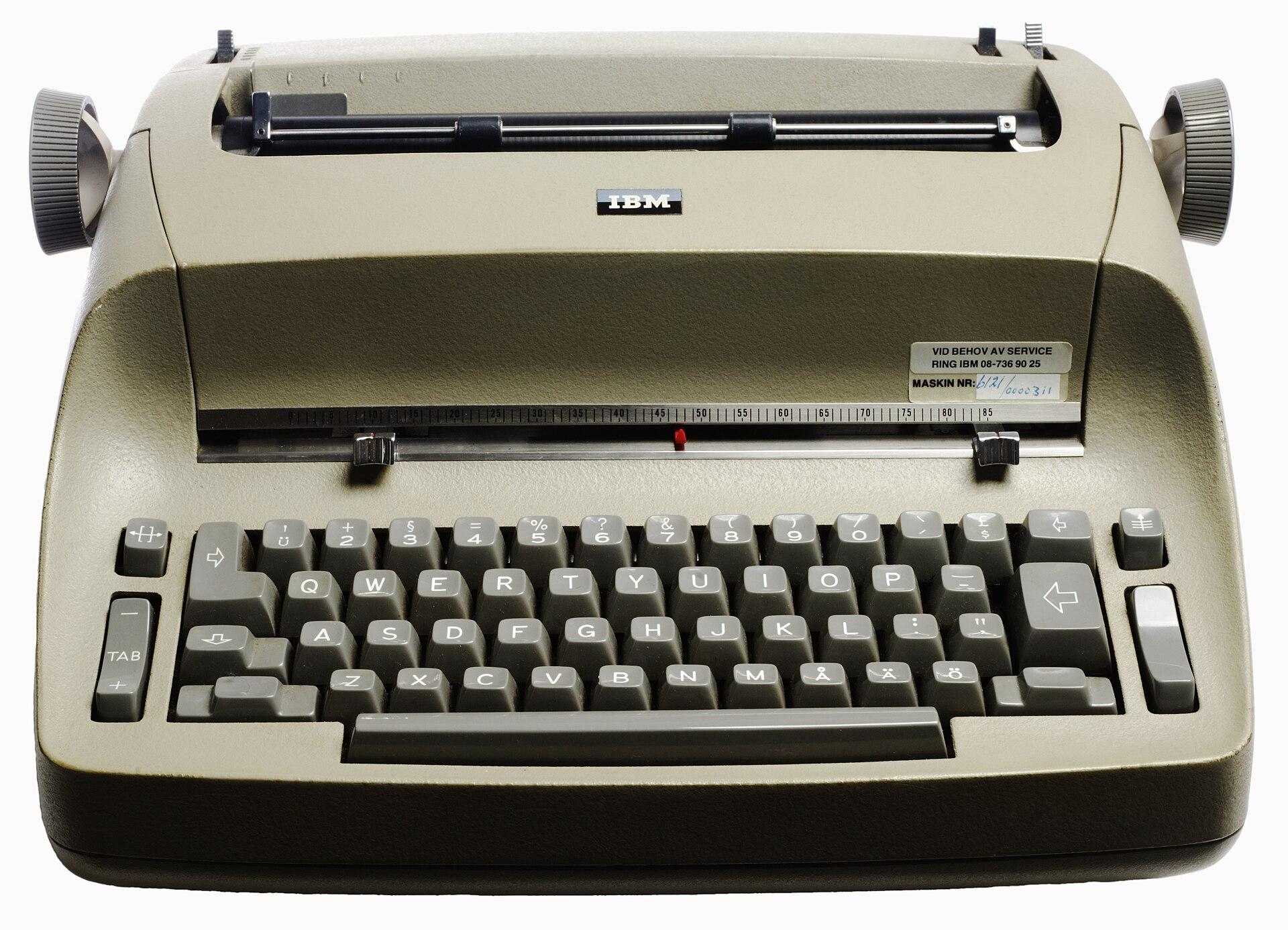
IBM's typewriter, keyboard, and lower-end printer operations — its Information Products Division — were divested in 1991 to form Lexmark. IBM retained its high-end Printing Systems Division until 2007, when it created the InfoPrint Solutions joint venture with Ricoh. Ricoh completed its acquisition by mid-2010, ending IBM's direct involvement in printing hardware.
Timeline
1959
IBM 1403 line printer introduced alongside the IBM 1401 computer.
1960s–1970s
The 1403 continued in the product line through the System/360 and System/370 eras, remaining available into the early 1980s.
April 15, 1975
IBM 3800 laser printing system (Model 001) announced.
July 1976
IBM 3800 first shipped; among the earliest commercially available laser printers.
1980
3800 manufacturing moved to Tucson, Arizona, with the opening of the Tucson plant.
November 1, 1982
IBM 3800 Model 3 announced, with higher speed and resolution.
1985
IBM Proprinter (Model 4201) dot-matrix printer introduced for the PC market.
1980s
Development of Advanced Function Printing (AFP) and the Intelligent Printer Data Stream (IPDS).
October 2, 1990
IBM 3900 advanced-function page printer announced as the successor to the 3800; developed with Hitachi Koki, shipping in the early 1990s.
March 27, 1991
Lexmark International formed via leveraged buyout of IBM's Information Products Division (printers, typewriters, keyboards) by Clayton & Dubilier.
January 25, 2007
IBM and Ricoh announce a printing-systems joint venture.
June 1, 2007
InfoPrint Solutions Company begins operating, with Ricoh initially the majority owner at 51 percent.
June 30, 2010
Ricoh completes its acquisition; InfoPrint Solutions becomes a wholly owned Ricoh subsidiary, ending IBM's direct role in printing.
.jpg)
Printing technologies
IBM's printers spanned several distinct marking technologies over their lifetime.
- Impact line printing using a horizontally moving print chain or train of individual character slugs, struck from behind by hammers, as in the IBM 1403.
- Impact dot-matrix printing with wire print heads, as in the Proprinter family.
- Laser xerography (electrophotography) on continuous-form paper, introduced with the IBM 3800 and carried forward in its successors.
- Advanced Function Printing (AFP) and the Intelligent Printer Data Stream (IPDS) — a device-independent page architecture and printer data stream for enterprise output, rather than a marking technology in themselves.
Major printer families
- IBM 1403 — the mainframe impact line printer, introduced in 1959 and long associated with 1401, System/360, and System/370 output.
- IBM 3800 — the laser printing subsystem announced in 1975 and shipped from 1976, using laser and electrophotographic imaging on continuous forms.
- IBM 3900 — the Advanced Function page printer announced in 1990 as the successor to the 3800.
- IBM Proprinter — the desktop dot-matrix line for the IBM PC era, including the 4201 and later wide-carriage variants such as the X24 and XL24.
- IBM InfoPrint — the enterprise printer line later carried forward under InfoPrint Solutions and Ricoh.
Product areas
IBM's printing hardware addressed several markets simultaneously.
- Enterprise and data center — high-speed line and laser/page printers for mainframe output, including the 1403, 3800, 3900, and later InfoPrint systems.
- Consumer and small office — desktop dot-matrix printers for the IBM PC era, chiefly the Proprinter.
- Industrial and high-volume production — continuous-form electrophotographic printing for applications such as bank statements, invoices, and similar bulk documents.
Major innovations
IBM contributed several developments that shaped how business documents were produced.
- The IBM 1403's chain and train print mechanism delivered exceptional speed and print quality for its era and became a long-lived standard for mainframe output.
- The IBM 3800 was among the first commercial systems to combine a laser with electrophotographic imaging for high-volume computer printing; it is often described as the first commercially available laser printer, though competing claims exist for other early page-printing systems.
- Advanced Function Printing (AFP) and the Intelligent Printer Data Stream (IPDS) introduced a device-independent, resource-based approach to composing and printing enterprise documents — merging text with images, graphics, and overlays — which remained influential in high-volume transactional printing.
Influence on printing history
IBM's printers set benchmarks that shaped enterprise output for decades. The 1403 defined high-speed impact line printing for the mainframe era; the 3800 helped establish laser electrophotography as the technology for high-volume computer printing; and AFP and IPDS influenced the architecture of transactional and production printing that persists in banking, insurance, and utility billing. Through the Lexmark spin-off and the Ricoh transfer, IBM's printing engineering and product lines continued under successor companies.
Relationships with other manufacturers
IBM's printing history intersected with several other companies.
- Xerox — a contemporaneous pioneer in xerography and laser printing; IBM's 3800 and Xerox's page-printer systems were parallel developments in the mid-1970s.
- Hitachi Koki — co-developed the IBM 3900, supplying the print engine while IBM provided the control unit.
- Clayton & Dubilier — the private investment firm that acquired IBM's Information Products Division to create Lexmark in 1991.
- Ricoh — partner in the 2007 InfoPrint Solutions joint venture and eventual full owner of IBM's former Printing Systems Division.
- Lexmark — spun off from IBM in 1991, inheriting IBM's typewriter (Selectric heritage), keyboard (Model M), and desktop-printer operations.
Legacy technologies
Several IBM printing technologies outlasted the company's own involvement in printing hardware. The chain and train line-printer mechanism of the 1403 remained a reference point for mainframe output long after its production ended in the early 1980s. Continuous-form laser electrophotography, pioneered with the 3800, became the standard approach for high-volume computer printing. Advanced Function Printing and IPDS endured as an architecture for transactional and production printing, and the product lines built around them passed to Ricoh, while IBM's desktop-printer and typewriter engineering continued under Lexmark.
Current status
IBM no longer manufactures printers. Its consumer and desktop printer, typewriter, and keyboard operations became the independent company Lexmark in 1991. Its remaining high-end Printing Systems Division became the InfoPrint Solutions Company joint venture with Ricoh in 2007 and passed fully to Ricoh by 2010. IBM's printing business is entirely historical; related product lines live on under Ricoh and, separately, Lexmark.
Frequently asked questions
- Does IBM still make printers?
- No. IBM's desktop-printer and typewriter operations became Lexmark in 1991, and its high-end Printing Systems Division became the InfoPrint Solutions joint venture with Ricoh in 2007, which Ricoh fully absorbed by 2010. IBM's role in printing is entirely historical.
- What was the IBM 3800?
- The IBM 3800, announced in 1975 and first shipped in 1976, was a high-volume printing system that combined a laser with xerographic (electrophotographic) imaging on continuous-form paper. It is often described as among the first commercially available laser printers.
- What is the IBM 1403 known for?
- The IBM 1403, introduced in 1959 with the IBM 1401, was a high-speed impact line printer using a moving chain or train of character slugs struck by hammers. It became a long-lived standard for mainframe output and remained available into the early 1980s.
- What are AFP and IPDS?
- Advanced Function Printing (AFP) and the Intelligent Printer Data Stream (IPDS) are IBM's device-independent page architecture and printer data stream, developed in the 1980s to compose enterprise documents that merge text with images, graphics, and overlays. They remained influential in high-volume transactional printing.
- How is IBM connected to Lexmark and Ricoh?
- Lexmark was formed in 1991 from IBM's Information Products Division through a leveraged buyout by Clayton & Dubilier, inheriting IBM's typewriter, keyboard, and desktop-printer operations. Ricoh acquired IBM's remaining high-end printing business through the InfoPrint Solutions joint venture, completing full ownership in 2010.
Source transparency (11 sources)
These references support claims made in this entry. The archive uses verified institutional and public-domain sources only; see Source policy.
Sources consulted (11)
- IBM 1403 — Wikipedia
- How the IBM 1403 Printer Hammered Out 1,100 Lines Per Minute — IEEE Spectrum
- The IBM 1403 Printer — Columbia University Computing History
- IBM 3800 — Wikipedia
- The IBM 3800, the First Commercially Available Laser Printer — History of Information
- The IBM 3900 Advanced Function Printer (announcement ENUSZG90-0291) — IBM
- IBM ProPrinter — Guide to Operations (First Edition, April 1985) — IBM (via archive)
- IBM ProPrinter 4201-001 — Centre for Computing History
- Lexmark — Wikipedia
- IBM and Ricoh to Create Joint Venture Printing Systems Company — Ricoh
- IBM's Printing Systems Division Becomes InfoPrint Solutions Company — Ricoh
Continue in the archive
Related reading
History · From line-based output to page printing
Early Computer Printing
How early computers produced printed output, from line printers to the move toward page-oriented printing.
History · The impact-printing era
How Impact Printing Worked
Impact printing endured because it was forgiving: it tolerated poor conditions, cheap supplies, and neglect, and failed slowly rather than suddenly.
History · From specialised equipment to mainstream office printing
The Evolution of Laser Printing
How laser printing developed from a specialised technology into a standard for fast, sharp office output.
Brands · Lexmark
Lexmark
Lexmark International: the 1991 IBM spin-off that became a laser printing, imaging, and managed print services company, later acquired by Xerox.