
Key takeaways
- Dot matrix is an impact technology: pins strike an inked ribbon against paper.
- It is comparatively noisy and coarse but durable and inexpensive to run.
- It persisted where multi-part forms and ribbon economy mattered.
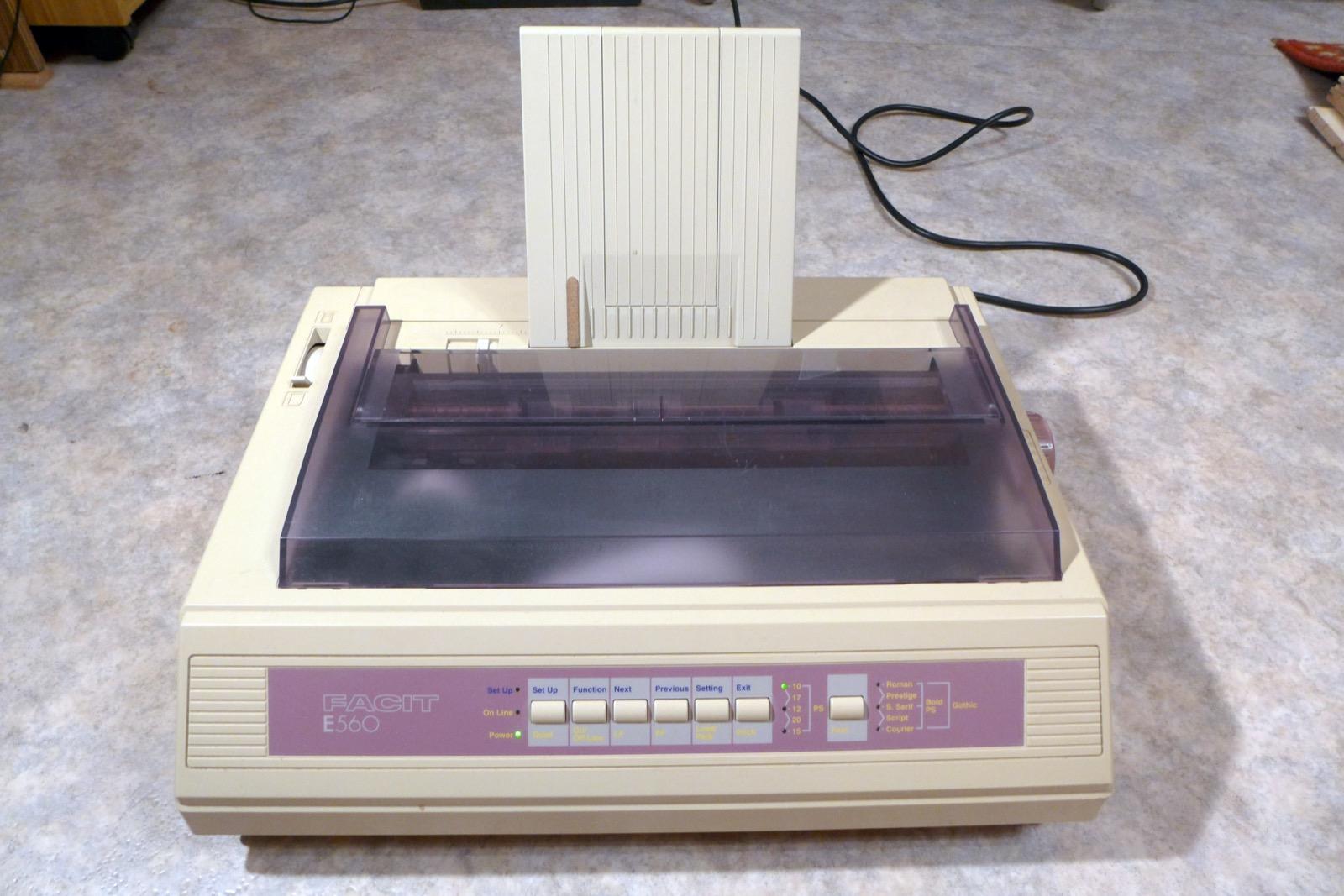
A dot matrix printer forms each character from a small grid of dots produced by pins striking an inked ribbon against the paper. Because it physically strikes the page, it is an impact printer, in contrast to non-impact methods such as inkjet and laser.
How the mechanism works
A moving print head contains a column of pins. As the head travels across the line, selected pins fire to press the ribbon against the paper, building characters and simple graphics dot by dot.
Trade-offs
- Noisier than non-impact printers because printing is mechanical striking.
- Lower resolution and rougher output than laser or inkjet.
- Low running cost and high durability in demanding environments.
Why it persisted
Because impact transfers through layers, dot matrix could print multi-part carbonless forms in a single pass. That capability, along with rugged reliability and inexpensive ribbons, kept it in use for invoices, logistics, and similar tasks well after office output generally moved to laser and inkjet.
Frequently asked questions
- Why is a dot matrix printer so loud?
- It prints by mechanically striking pins against an inked ribbon and paper, which is inherently noisier than non-impact methods.
- Why were dot matrix printers still used after laser and inkjet existed?
- Impact printing can mark multi-part carbonless forms in one pass, and the printers are durable with low running costs, which suited specific business tasks.
- Is dot matrix the same as a typewriter?
- Both are impact methods, but a typewriter strikes whole character shapes while a dot matrix printer builds characters from a pattern of dots.
Continue in the archive
Related reading
History · From early printing to the digital era
The History of Printers
How printing technology progressed from early hand methods through mechanical presses to modern non-impact digital printers.
History · From line-based output to page printing
Early Computer Printing
How early computers produced printed output, from line printers to the move toward page-oriented printing.
Guides · Introductory
Laser vs Inkjet Printers
A balanced, factual comparison of laser and inkjet printing and which suits text, colour, photos, and volume.
History · The impact-printing era
How Dot Matrix Printers Work
Dot matrix solved an office problem before it was a mechanism: cheap, durable, simultaneous multi-part copies created in the act of printing.