Key takeaways
- Laser printing relies on static electricity, not liquid ink.
- An image is formed on a drum, developed with toner, transferred to paper, and fused with heat.
- Pages are often warm because the toner is melted onto the paper by a fuser.
A laser printer does not paint a page with liquid. Instead it uses controlled static electricity to place a fine powder, called toner, exactly where the image should be, then bonds that powder permanently to the paper with heat.
Charging the drum
At the heart of the printer is a light-sensitive cylinder, often called the drum. The printer first gives the drum a uniform electrical charge so that its entire surface is in a known starting state.
Writing the image with light
A laser, steered across the drum, selectively changes the charge wherever the page should carry toner. This produces an invisible electrostatic pattern on the drum that corresponds to the text and graphics of the page.
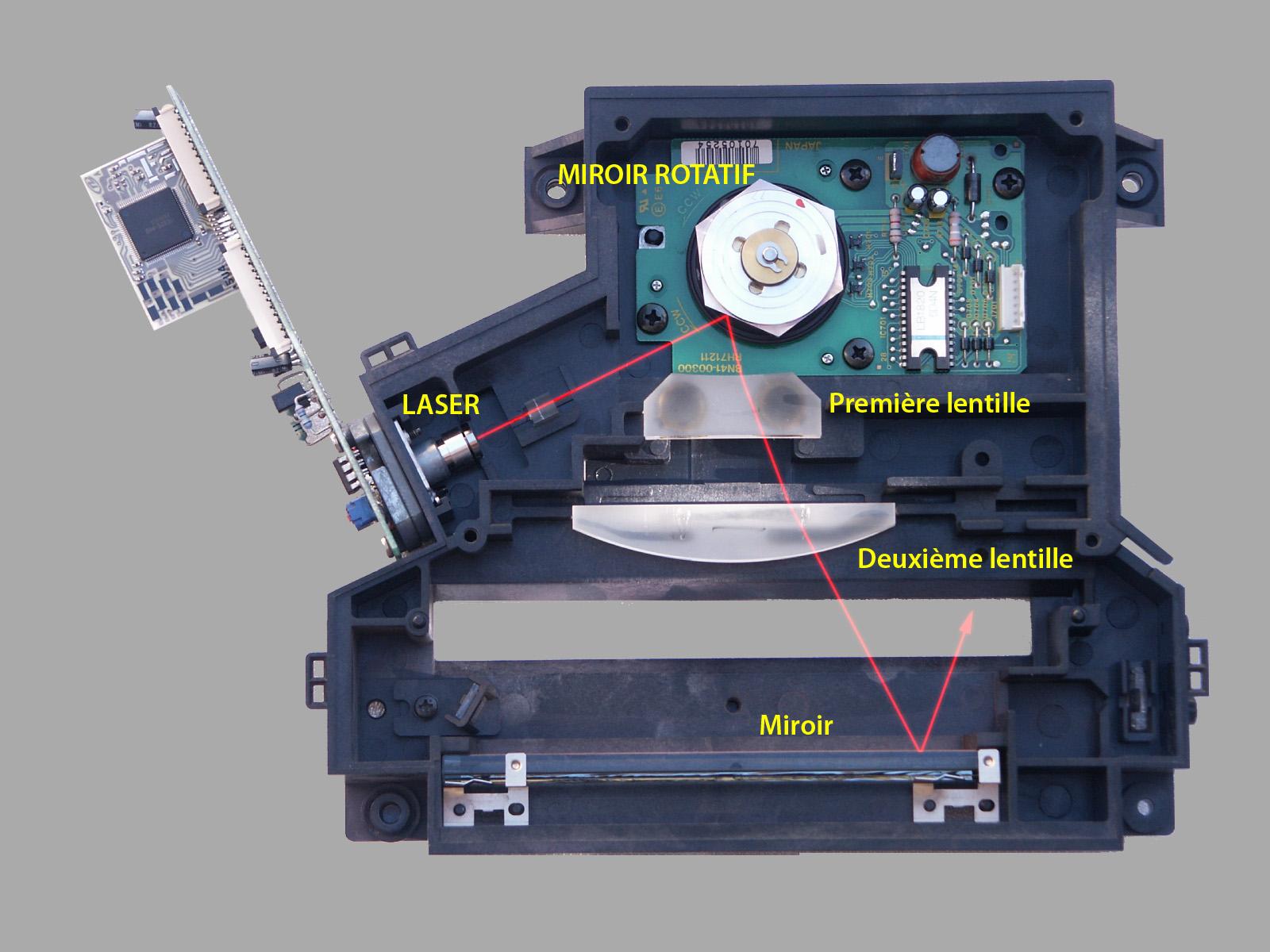

Developing with toner
Toner is then brought close to the drum. Because of the charge difference, toner is attracted only to the areas the laser addressed, developing the invisible pattern into a visible powder image on the drum.
Transfer and fusing
The toner image is transferred from the drum onto a sheet of paper. At this point the powder is only resting on the surface. The paper then passes through a heated fuser, which melts the toner so it bonds permanently to the fibres of the page.
Frequently asked questions
- Why is paper warm when it leaves a laser printer?
- The fuser uses heat to melt toner onto the page, so sheets are often warm immediately after printing.
- Does a laser printer use ink?
- No. It uses toner, a dry powder, which is fused to paper with heat rather than absorbed as a liquid.
- Why are laser printers good for text?
- The image is formed by a precisely controlled beam and dry toner, which produces sharp edges well suited to text and line art.
Continue in the archive
Related reading
Guides · Introductory
How Inkjet Printers Work
How an inkjet printer forms an image by precisely placing tiny droplets of liquid ink onto paper.
Guides · Introductory
Laser vs Inkjet Printers
A balanced, factual comparison of laser and inkjet printing and which suits text, colour, photos, and volume.
History · From specialised equipment to mainstream office printing
The Evolution of Laser Printing
How laser printing developed from a specialised technology into a standard for fast, sharp office output.
Glossary · Definition
Toner
Toner is the fine powder used by laser and LED printers to form images, fused to the page with heat and pressure.