History
Optical Character Recognition (OCR) is the machine conversion of images of text — printed, typed, or handwritten — into machine-encoded, character-level data. Its history spans roughly a century and is conventionally divided into four phases: early electromechanical and photoelectric reading machines (1910s–1930s); the first electronic and commercial systems with standardized machine-readable fonts (1950s–1960s); postal and omni-font document automation (1970s–1990s); and the shift to statistical and neural methods that dominate today. Two drivers recur throughout: accessibility (reading aids for blind users) and high-volume data entry (banking, retail, postal, and archival work).
A caution runs through the topic: many "firsts" are contested, dates are reported inconsistently across secondary sources, and several early machines were pattern or mark readers, or document-retrieval devices, rather than general-purpose character recognizers.
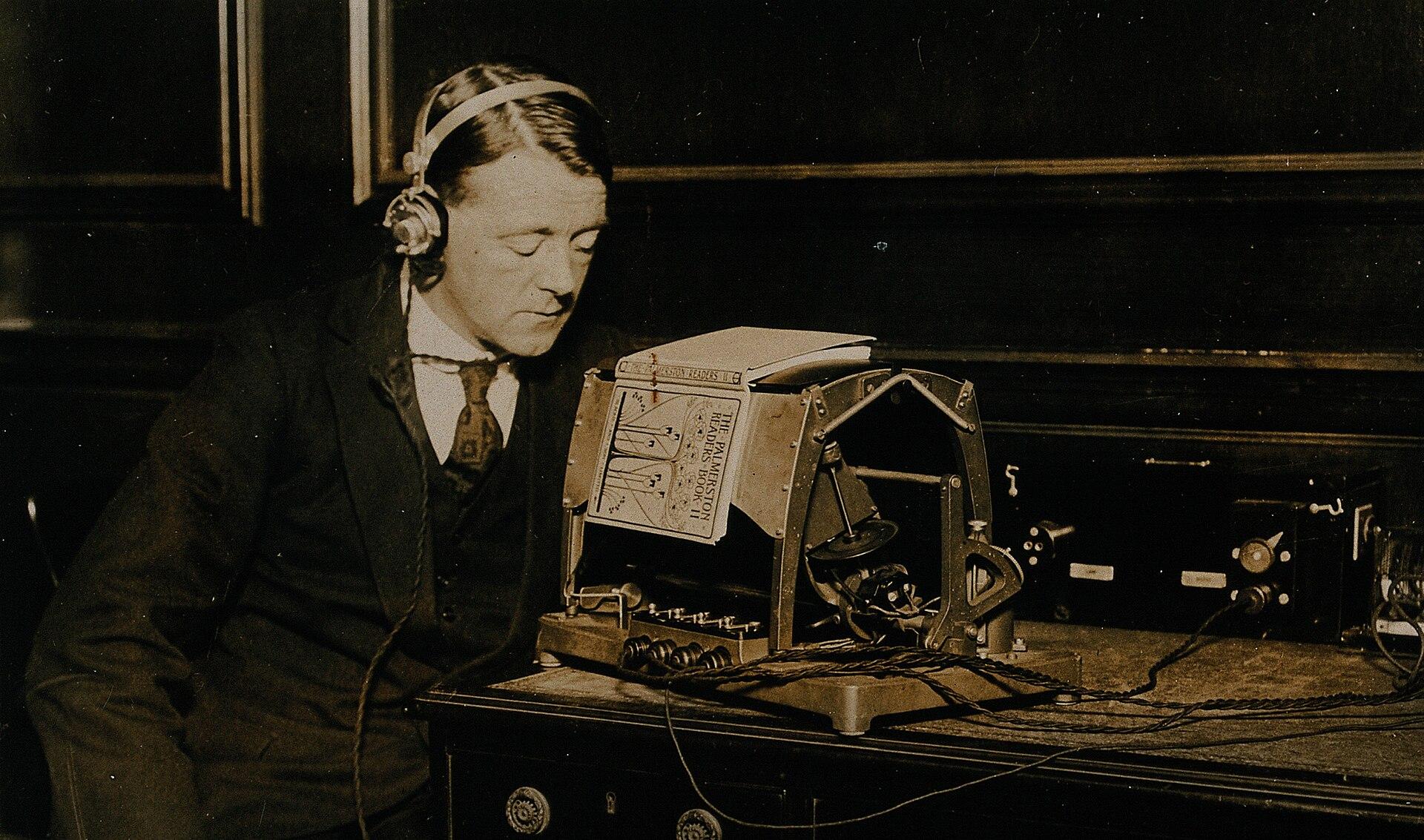
Early reading machines (1910s–1930s). The earliest cited devices were sensory-substitution and pattern-matching machines rather than text-to-data converters. The Optophone, invented by E. E. Fournier d'Albe (invented 1913; refined for production 1918 with Barr & Stroud), scanned printed text and produced characteristic tones so blind readers could learn to "hear" letters. Emanuel Goldberg, working at Zeiss Ikon in Dresden, built a photoelectric microfilm search machine and received U.S. Patent 1,838,389 (granted December 29, 1931) for the "Statistical Machine"; the patent was later acquired by IBM. This is better described as photoelectric pattern recognition and document retrieval than as text OCR. Paul W. Handel received U.S. Patent 1,915,993 (granted June 27, 1933, assigned to General Electric), describing photoelectric comparison of a character against a stored image. Gustav Tauschek's "Reading Machine" used template (mask) matching; his U.S. Patent 2,026,330 was granted December 31, 1935, and carries an Austrian priority of May 30, 1928. (A frequently repeated "German 1929 patent" is secondary and unconfirmed against the primary record.)
First electronic and commercial OCR (1950s). David H. Shepard, while at the Armed Forces Security Agency, built an OCR device nicknamed GISMO with Harvey Cook Jr. In 1952 he co-founded Intelligent Machines Research Corporation (IMR) with William Lawless Jr. to commercialize the technology. Secondary sources report an early installation at Reader's Digest (1955) and a system for Standard Oil of California reading credit-card imprints; these installation details remain secondary-sourced. Shepard also designed the Farrington B numeric font used on credit cards, chosen for reliable recognition. Jacob Rabinow separately worked on reading machines in the 1950s.
Standardized machine-readable fonts (1960s). So machines did not have to cope with arbitrary type, purpose-built faces emerged. OCR-A's numeric set originated in 1961 and an alphanumeric set in 1966; American Type Founders produced OCR-A in 1968 to U.S. Bureau of Standards criteria (associated with ANSI X3.17 and ISO 1073-1). OCR-B was designed by Adrian Frutiger in 1968 for Monotype under the European Computer Manufacturers Association (ECMA) effort, intended to be more human-legible while remaining machine-readable, and was accepted as an international standard around 1973 (ISO 1073-2).
Early commercial OCR products (1960s). IBM announced the 1418 Optical Character Reader (September 16, 1960; numeric font), the 1428 Alphanumeric Reader (April 26, 1962), the 1287 (announced October 4, 1966, first shipped January 1968; an engineering model was demonstrated at the 1964–65 New York World's Fair), described by IBM as the first commercial scanner able to read handprinted numbers, and the 1288 Optical Page Reader (announced July 15, 1968), which read OCR-A plus optional handprinted numbers.
Postal automation. The U.S. Post Office Department placed a high-speed OCR into service in the Detroit Post Office in November 1965, reading the city/state/ZIP line of typed addresses at up to about 43,000 addresses per hour. It could read only about 80 of roughly 600 typefaces then in use, so mail had to be pre-culled; by 1970 several post offices used such readers.
Omni-font OCR and reading machines (1970s). Ray Kurzweil founded Kurzweil Computer Products in 1974 and led development of the first omni-font OCR, able to recognize essentially any ordinary typeface. On January 13, 1976, the Kurzweil Reading Machine was unveiled with the National Federation of the Blind, combining a CCD flatbed scanner, omni-font OCR, and text-to-speech into a print-to-speech reading machine. Commercial sales began around 1978 (LexisNexis is cited as an early customer). The company was later acquired by Xerox; the OCR line became ScanSoft, which merged into Nuance Communications.
Statistical and neural OCR (late 1980s–present). Around 1989, Yann LeCun and colleagues at AT&T Bell Labs applied backpropagation-trained convolutional networks (the LeNet lineage) to handwritten ZIP-code digits for the U.S. Postal Service — foundational work for modern deep learning and handwriting recognition. Tesseract was developed at Hewlett-Packard between roughly 1985 and 1994, open-sourced by HP in 2005, and sponsored by Google from about 2006 to 2018; Tesseract 4 (c. 2018) added an LSTM neural line-recognition engine alongside the legacy engine, and Tesseract 5.0.0 was released November 30, 2021. Since the 2010s the field has moved from hand-engineered features toward end-to-end neural sequence models, including transformer-based recognizers.

How it works
A conventional OCR pipeline (pre-neural, and still broadly descriptive) proceeds through several stages:
- Image acquisition — scanning or photographing the document to produce a raster image.
- Pre-processing — de-skewing, despeckling and denoising, binarization (converting greyscale or color to black-and-white), and normalization.
- Layout / zone analysis — detecting text regions versus images and tables, and determining column and reading order, lines, and words.
- Character segmentation — isolating individual glyphs (harder for connected or handwritten script).
- Recognition — assigning characters via matrix/template matching (pixel comparison against stored glyphs) or feature extraction (decomposing glyphs into strokes, loops, and intersections, then classifying).
- Post-processing — using lexicons, language models, co-occurrence statistics, and edit-distance measures (such as Levenshtein distance) to correct errors, then output as text, hOCR/ALTO, or a text layer.
Modern neural OCR compresses several of these stages: convolutional or transformer encoders learn features directly from image data, and sequence models (LSTM/CTC or attention decoders) predict character sequences per line, often reducing the need for explicit character segmentation.
Approach and techniques
- Template / matrix matching — the earliest and simplest method, comparing the input glyph to stored prototypes; sensitive to font, size, and noise. Used by mechanical readers (Tauschek) and first-generation electronic machines.
- Feature extraction / structural methods — recognize glyphs from abstracted features (lines, curves, loops), enabling font-independent (omni-font) recognition of the Kurzweil era.
- Statistical / machine-learning classifiers — k-nearest neighbors, support vector machines, and hidden Markov models applied to extracted features from the 1990s–2000s.
- Neural networks and deep learning — convolutional networks (the LeNet lineage), LSTM line recognizers (Tesseract 4), and transformer models, learned end-to-end from large labeled corpora.
- Related distinctions — OCR typically denotes machine-printed text; ICR (Intelligent Character Recognition) denotes handwriting; OMR (Optical Mark Recognition) detects marks or bubbles rather than characters. Several early "OCR" machines were partly OMR devices.
Accuracy and quality factors
Reported accuracy varies enormously with the material, and blanket percentage claims should be avoided. Documented ranges exist only for specific corpora: for example, studies of 19th–20th-century newspaper digitization report character-level accuracy from roughly the low-80s to high-90s percent for commercial OCR, with word-level accuracy substantially lower because errors compound across a word. That figure is specific to that corpus and should not be generalized into an overall "OCR accuracy" number.
Key quality factors include:
- Source quality — scan resolution (DPI), contrast, skew, bleed-through, and paper or print degradation.
- Typography — unusual, decorative, or historical fonts; the classic long-s (ſ) versus f confusion in older texts; ligatures and condensed spacing.
- Language and script — availability of language models and lexicons; non-Latin, connected, or right-to-left scripts; diacritics.
- Layout complexity — multi-column text, tables, marginalia, and mixed text and graphics.
- Handwriting — far harder than print, and highly dependent on constrained versus unconstrained writing.
- Post-processing — dictionaries and language models materially improve real-world word accuracy.
Because vendors and studies measure accuracy differently (character versus word, clean versus degraded corpora), cross-product comparisons are unreliable without a shared benchmark.
Advantages
- Converts static page images into searchable, indexable, and editable text.
- Enables large-scale digitization of archives, books, newspapers, and records.
- Automates high-volume data entry (banking, retail, invoices, forms, postal sorting), reducing manual keying.
- Supports accessibility through screen readers and print-to-speech for blind and low-vision users — the original Optophone and Kurzweil motivation.
- Facilitates downstream automation such as full-text search, translation, data extraction, and analytics.
Limitations
- Accuracy degrades on poor scans, degraded originals, complex layouts, and unusual fonts.
- Handwriting and historical scripts remain challenging.
- OCR output is probabilistic and can introduce silent errors that require human review for high-stakes use.
- Layout and structure (tables, reading order) can be lost or mangled.
- Language and script coverage is uneven; low-resource languages have weaker models.
- Neural OCR needs large labeled training data and compute, and can fail unpredictably on out-of-distribution inputs.
Relationship to scanning
OCR depends on an upstream image-capture step — historically flatbed and sheet-fed scanners, now also cameras and smartphones. Scan quality (resolution, lighting, focus, skew) is a primary determinant of OCR accuracy. Scanning and OCR are distinct stages (image acquisition versus recognition), and many "scanning" products bundle OCR as a post-capture step. The Kurzweil Reading Machine, which integrated a CCD flatbed scanner with omni-font OCR and text-to-speech, illustrates how scanning hardware and recognition software advanced alongside one another.
Relationship to PDF and searchable PDF
A scanned document is initially just a raster image (an image-only PDF) with no selectable text. Running OCR produces a text layer that can be overlaid on the page image, yielding a searchable ("sandwich") PDF: the page looks identical, but the underlying text is selectable, searchable, and copyable. Archival formats such as PDF/A are commonly paired with OCR text layers for preservation. OCR is therefore the bridge between image-only PDFs and text-accessible PDFs; intermediate OCR formats such as hOCR and ALTO XML carry the word coordinates used to build that layer.
Relationship to workflows
OCR is rarely an end in itself; it sits inside document-processing pipelines: capture → pre-process → OCR → classify/extract → validate → route/store. Downstream steps include forms and invoice data extraction, indexing for enterprise search, records management, robotic process automation, and, increasingly, feeding text to NLP and large-language-model systems. Postal sorting (address parse → sort → barcode) and banking (cheque and credit-card imprint reading) are classic end-to-end OCR workflows; modern "intelligent document processing" generalizes this pattern.
Modern relevance
OCR remains foundational and is more capable than ever. Neural line and page recognizers handle diverse fonts, multiple languages, and camera images; mobile OCR powers real-time translation and document-scanning apps; and OCR feeds retrieval-augmented and LLM pipelines by turning documents into text. Open-source engines such as Tesseract and PaddleOCR coexist with transformer-based models and mature commercial offerings. Active frontiers include robust handwriting recognition, historical-document and low-resource-language OCR, and layout- and structure-aware extraction of tables and forms.
Timeline
**c. 1913
Optophone.** Fournier d'Albe invents a text-to-tone reading aid for blind users (refined for production 1918).
**1931 (Dec 29)
Goldberg "Statistical Machine."** U.S. Patent 1,838,389 granted; photoelectric microfilm retrieval, later acquired by IBM.
**1933 (Jun 27)
Handel "Statistical Machine."** U.S. Patent 1,915,993 (assigned to GE); photoelectric character comparison.
**1935 (Dec 31)
Tauschek Reading Machine.** U.S. Patent 2,026,330 granted, with an Austrian priority of May 30, 1928.
**1952
Intelligent Machines Research Corporation founded** by David Shepard and William Lawless Jr.
**1960 (Sep 16)
IBM 1418** OCR announced (numeric font).
**1961
OCR-A numeric character set** originated in the U.S.
**1962 (Apr 26)
IBM 1428** alphanumeric reader announced.
**1965 (Nov)
First USPS OCR in service, Detroit**, reading typed ZIP-line addresses.
**1966 (Oct 4)
IBM 1287 announced** (demonstrated at the 1964–65 World's Fair; ships January 1968); reads handprinted numbers.
**1968
OCR-A produced by ATF; OCR-B designed by Adrian Frutiger (ECMA/Monotype); IBM 1288 announced** (July 15).
**1974
Kurzweil Computer Products founded; omni-font OCR** developed.
**1976 (Jan 13)
Kurzweil Reading Machine unveiled** (scanner + omni-font OCR + text-to-speech).
**c. 1985–1994
Tesseract developed at Hewlett-Packard.**
**1989
LeCun et al. apply convolutional networks (LeNet) to handwritten ZIP-code digit recognition** for the USPS.
**2005
HP open-sources Tesseract**; Google sponsors development c. 2006–2018.
**c. 2018
Tesseract 4** adds an LSTM neural engine.
**2021 (Nov 30)
Tesseract 5.0.0 released.**
Frequently asked questions
- Who invented OCR?
- There is no single inventor; "first OCR" is contested. Early photoelectric and template-matching devices came from Emanuel Goldberg (U.S. Patent 1,838,389, 1931), Paul Handel (1933), and Gustav Tauschek (U.S. Patent 2,026,330, 1935). David Shepard's GISMO in the early 1950s is often cited as the first practical electronic OCR, and his firm IMR (1952) delivered early commercial systems.
- What was the Kurzweil Reading Machine?
- Unveiled on January 13, 1976 with the National Federation of the Blind, it combined a CCD flatbed scanner, the first omni-font OCR, and text-to-speech synthesis into a print-to-speech reading machine for blind users. Ray Kurzweil had founded Kurzweil Computer Products in 1974; the OCR line later passed to Xerox and became ScanSoft, then Nuance.
- What are OCR-A and OCR-B?
- They are typefaces designed to be reliably machine-readable. OCR-A is a high-contrast face whose numeric set originated in 1961 (associated with ANSI X3.17 and ISO 1073-1). OCR-B was designed by Adrian Frutiger in 1968 under the ECMA effort to be more human-legible while remaining machine-readable, and was accepted as an international standard around 1973 (ISO 1073-2).
- When did OCR become neural?
- Statistical and neural methods emerged from the late 1980s. Around 1989, Yann LeCun and colleagues applied convolutional networks (the LeNet lineage) to handwritten ZIP-code digits for the USPS. Tesseract 4 (c. 2018) added an LSTM engine, and since the 2010s the field has shifted toward end-to-end neural sequence models, including transformer-based recognizers.
- How accurate is OCR?
- Accuracy depends heavily on the material, so blanket percentages should be avoided. As one documented example, studies of historical-newspaper digitization report character-level accuracy from roughly the low-80s to high-90s percent, with word-level accuracy substantially lower because errors compound. Cross-product comparisons are unreliable without a shared benchmark.
Source transparency (12 sources)
These references support claims made in this entry. The archive uses verified institutional and public-domain sources only; see Source policy.
Sources consulted (12)
- US Patent 1,838,389 — Statistical Machine (Goldberg) — Google Patents / USPTO
- US Patent 1,915,993 — Statistical Machine (Handel, GE) — Google Patents / USPTO
- US Patent 2,026,330 — Reading Machine (Tauschek) — Google Patents / USPTO
- IBM optical mark and character readers — Wikipedia
- The 20th Century: Mechanization and Early Automation — Smithsonian National Postal Museum
- A Century Ago, the Optophone Allowed Blind People to Hear the Printed Word — IEEE Spectrum
- Tesseract (software) — Wikipedia
- Ray Kurzweil — Wikipedia
- OCR-A — Wikipedia
- OCR-B — Wikipedia
- Optical character recognition — Wikipedia
- Backpropagation Applied to Handwritten Zip Code Recognition (LeCun et al., Neural Computation 1:4, 1989) — Neural Computation / IEEE
Continue in the archive
Related reading
Guides · Advanced
Optical character recognition (OCR)
Editorial reference on OCR: its history, recognition pipeline, techniques, accuracy factors, and role in scanning and document workflows.
Guides · Intermediate
History of Scanning
A source-backed reference on the origins and evolution of image and document scanning, from facsimile precursors to driverless networked scanning.
Glossary · Definition
OCR (Optical Character Recognition)
OCR converts text within a scanned image into machine-readable, searchable characters.
Guides · Advanced
Handwriting Recognition
Encyclopedic reference on handwriting recognition (HWR): online vs. offline capture, history, techniques, accuracy factors, and its relationship to OCR.